

Case Study
Shucle's Local Impact in Platform Service Areas
Shucle Case Study Report Explore Shucle's Innovative Mobility Solutions
Shucle Case Study Report VOL. 3
Bridging Mobility Gaps


Shucle Case Study Report VOL. 2
Sustainable Cities and Urban Mobility
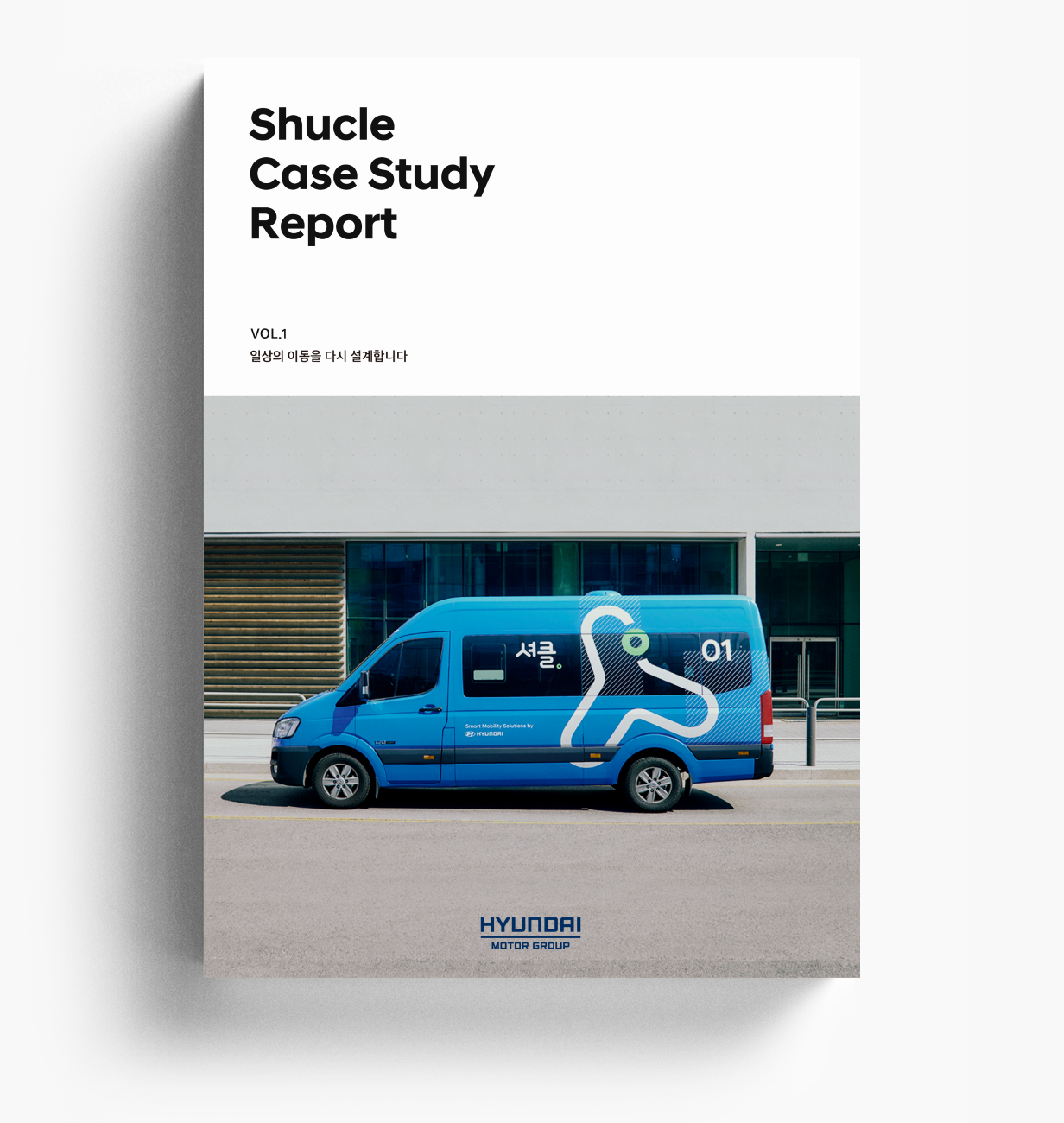
Shucle Case Study Report VOL. 1
Redesigning Everyday Mobility
Case 1. Hub-Centric Mobility
Okjeong New Town, Yangju
Better Accessibility to the Metro Station

About Okjeong
• Most of the travel demand arises between residential areas and the metro station, with a high concentration of commute travel demand, and relatively little mobility within the local area.
• The existing three bus routes were unable to meet the demand outside the central area, resulting in long wait times and inefficient transfers, leading to frequent complaints.
Effect
• 51.5% decrease in total travel time
• Significant enhancement in mobility convenience
• Increased operation efficiency to and from major destinations during peak hours

Case 2. Rural Areas with Aged Population
Daebudo, Ansan
Senior Pedestrian Travel Down 80%

About Daebudo
• A rural area with low population density and high proportion of elderly residents.
• Inconvenient mass transit system with fixed-route buses operating every 20 to 120 minutes.
• Long walking distance to bus stops complicating transit use
Effect
• Out-of-vehicle time reduced by 80.3%
• Call-a-ride service to better accommodate elderly travel demand

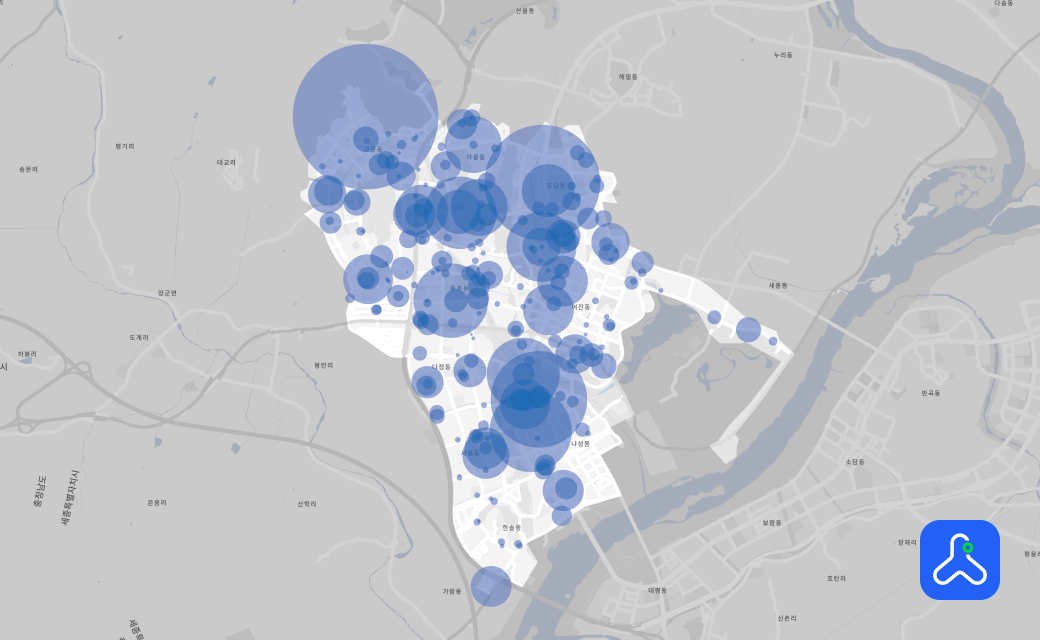
Case 3. Covering a Wide Variety of Mobility Demand
Sejong 1 & 2 Living Area,
Shucle as an Established Daily Mobility

About Sejong
• Urban area with high population density.
• Diverse travel patterns across age groups.
• Local bus network unable to meet the local travel demand.
• Irregular and scattered mobility needs encouraging private car use.
• Modal share of private cars at 46.9%, causing significant traffic congestions
Effect
• Private car usage decreased by 42.1%.
• Out-of-vehicle time reduced by 70.3%.
• Improved traffic conditions and better accessibilty.
Case 4. Targeting Urgent Transportation Issues
Gimpo, Gyeonggido
Relieving Gimpo Goldline Crowding

About Gimpo
• Sharp increase of travel demand with 16,000 newly constructed apartment units.
• The extreme congestion of the Gimpo Goldline during peak hours resulted in an emergency government measure, launching DRT in the area within just 70 days.
Effect
• Gimpo Goldline congestion rate dropped from 250% to 200% with the introduction of fixed-route DRT service.
• Enhanced commuter satisfaction with seat reservation and closer distance to boarding stops.
• Different operational modes depending on the time of day for improved service usability during peak hours and efficiency during off-peak hours


“Shucle hopes to offer a fresh perspective on the meaning of mobility in everyday life, exploring how the integration of smart technologies can transform transportation, and ultimately contribute to finding solutions for the future.”
Shucle Case Study Report VOL. 1


